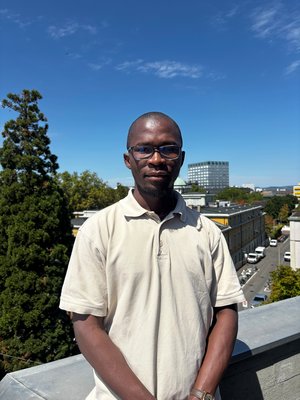
My name is Wahab Lawundeh, a PhD fellow in the HEALENAE Doctoral Network, working on Project 1: Metabolic Impacts: Agricultural Intensification and Health Transformations, supervised by Professor Ruth Jane Prince, University of Oslo, and Professor Rebecca Marsland, University of Edinburgh. I have a BSc in Sociology (Anthropology Option) from Njala University, Sierra Leone, and an MA in African Studies from the University of Basel, Switzerland.
My project explores how agricultural intensification, particularly the growing use of agro-chemicals, is reconfiguring the relationships between food, bodies, health, and the environment among small-scale farmers in Kenya. In this project, I conceptualise ‘metabolic health’ not as a fixed biomedical endpoint; I rather approach it as biosocial. Hence, I am interested in understanding how these farming communities in Kenya experience and interpret bodily changes in relation to agricultural practices, and whether or not they connect rising rates of metabolic diseases to agro-chemical intensification. Amid the burgeoning transformation reshaping the Kenyan agricultural sector in the last few decades, I examine how these embodied experiences are bound up with shifts in labour, land use, climate variability, and policy.
Importantly, I also explore the broader political economy of agrochemicals, including the supply chain networks linking Europe and Kenya, to read local experiences within a transnational political economy of agriculture. I ultimately engage with scientific, policy, and activist groups (both international and local), with the aim of contributing ethnographically grounded insights to ongoing efforts dedicated to protecting human health and the environment.
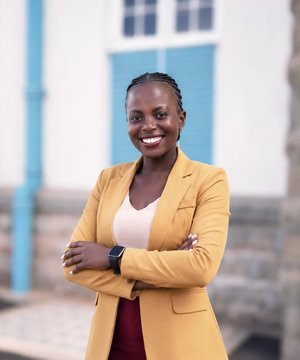
My PhD research, Digital Mediation of Care Across Distance: Climate-Driven Migration and the Elderly Left Behind in Eastern Uganda, will explore how digital technologies are transforming caregiving relationships in the context of climate-induced migration. As environmental pressures increasingly affect rural livelihoods, many working-age adults migrate in search of economic opportunities, leaving older family members behind. This study will examine how mobile phones, social media platforms, and digital remittance services facilitate care across distance, shaping emotional connections, caregiving practices, access to resources, and health outcomes among elderly populations.
Situated at the intersection of the anthropology of health, migration studies, climate change, aging, and digital communication, the research seeks to understand how families adapt to social and environmental change through technology-mediated care. My interest in this project was informed by more than five years of professional experience working with communities affected by climate-related livelihood disruptions, providing valuable insights into the ways migration is reshaping family dynamics and support systems.
Funded under the HEALENAE Project 2: Climate Change, Migration, and Care for the Elderly, this project contributes to broader discussions on health, mobility, and environmental change by generating community-centered and evidence-based perspectives and understanding of how climate and migration challenges influence the wellbeing of older adults across Africa and Europe.
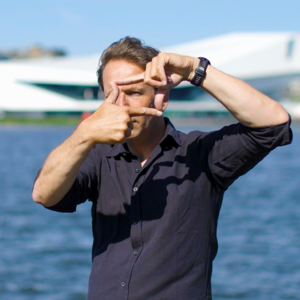
The introduction of straight lines into a landscape in Africa, and in Europe the process of bending them. Two movements, different directions, the same structural axis, and very visual.
My name is Robert Weijs, filmmaker and visual anthropologist (BA Cultural Anthropology, Leiden University; MA Visual Anthropology, University of Amsterdam). This observation is part of my PhD research within the HEALENAE Doctoral Network, Project 3: Livestock and Natural Resource Management: Biodiversity and Zoonotic Diseases. I am supervised by Professor Salome Bukachi at the University of Nairobi and Professor Ciara Kierans at Aarhus University, across a dual PhD enrolled jointly at both institutions.
In Loita, Kenya, communally held land is being divided into individual plots, changing the herds and knowledge that depended on it. In the Netherlands, intensified farming is under growing pressure, from a different direction.
My research follows what indigenous knowledge already holds about disease, land and animals in Loita, knowledge that may anticipate rather than lag behind biomedical understanding, and asks what a structural comparison between these two sites, pressured from different directions, can make visible about zoonotic risk that neither could reveal alone.
I have filmed in Loita for over twenty years. That archive, revisited now against a changing landscape, is not illustration but method: montage can evoke what a single observation cannot, and footage watched years later resists the neatness that memory and fieldnotes tend to impose. I bring a comparable, if different, closeness to the European site: I grew up in the Dutch countryside, in the same region where this intensification took hold. Alongside long-term participant observation, I work collaboratively, including at times through film elicitation with the people in the footage.
What the line reveals, in both directions, remains to be filmed.
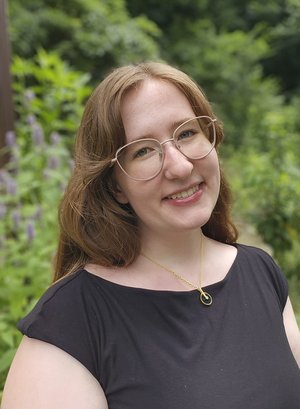
My name is Marie Cox, and I am a doctoral candidate in HEALENAE’s Project 4: Epidemics, disease, and state formation in Africa. I completed my BA in Political Science at Virginia Commonwealth University before earning an MSc with distinction in Conflict, Security, and Development at the University of Edinburgh. Throughout my studies, I have been fascinated by questions of governance and state-building, with a particular focus on how institutions and communities respond to crises. These interests have gradually led me toward the study of global health and its role in political and social life.
My doctoral research explores how epidemics and infectious disease preparedness have influenced state formation and governance in Uganda. Epidemic preparedness is often understood as a public health issue. However, I examine it as a form of governance that influences how states build authority, collaborate with international organizations, and engage with local communities. My project investigates how gendered forms of care and community health work are not only essential to epidemic preparedness but also shape how public health systems and state authority are encountered in everyday life.
By combining historical research, policy analysis, and ethnographic fieldwork, I aim to better understand how public health initiatives affect governance in practice and how these processes are experienced by the people involved. I am particularly excited about the opportunity to conduct fieldwork in Uganda and to learn from the diverse researchers, practitioners, and communities engaged in epidemic preparedness.
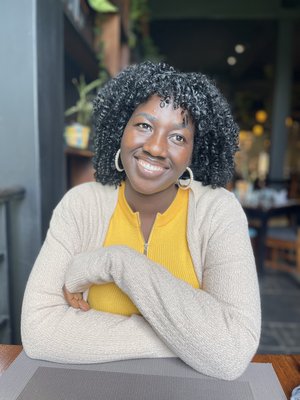
My name is Teddy Arach, and I will be working on an interdisciplinary research project that explores how climate-affected youth in Gulu, Northern Uganda, use digitally mediated social networks to navigate migration and support their psychosocial well-being. The project is supervised by Associate Professor Nanna Schneidermann at Aarhus University and co-supervised by Dr Stella Neema at Makerere University as part of the HEALENAE Doctoral Network.
Climate change is increasingly affecting livelihoods across Uganda, prompting many young people to migrate in search of education, employment, and improved living conditions. While migration can create new opportunities, it can also bring challenges such as social isolation, economic insecurity, stress, and the disruption of support networks. At the same time, the use of digital social networks has grown rapidly, particularly among young people. I am excited to investigate how digital platforms such as WhatsApp, Facebook, TikTok, and Instagram influence migration decisions among climate-affected youth while also supporting their psychosocial well-being through social connections, information sharing, and access to emotional and practical support.
I am particularly excited to engage directly with young people whose lives are being shaped by climate change. Their experiences offer important insights into how communities adapt to environmental challenges and how digital technologies are transforming everyday forms of care, resilience, and social connection. To explore these dynamics, I will use qualitative and ethnographic methods that foreground young people's perspectives and lived experiences.
What draws me most to this research is its interdisciplinary nature, which closely aligns with my academic and professional background in clinical practice, public health, and planetary health. I look forward to contributing policy-relevant knowledge that supports equitable, youth-centred adaptation strategies in climate-affected communities while working within a vibrant international research environment.
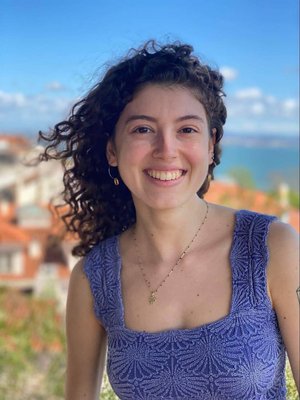
My name is Tia Scazighino, and I am a doctoral candidate in HEALENAE’s Project 6: Toxicity: Urban Living in Landscapes of Extraction. Under the co-supervision of Filip De Boeck at KU Leuven and Paul Wenzel Geissler at Oslo University, I will conduct a comparative study on the toxic fallout of colonial mining practices in South Africa and the UK. Through fieldwork in post-mining landscapes and brownfield sites, my project aims to uncover how the lived embodiment of toxicity manifests in physical and social health, and the transformation of urban life, labour, and spatial belonging.
Colonial mining activities in the Mpumalanga Province of South Africa and North West England have led to the gradual pollution of soil, water, and air, causing intergenerational harm and making these places feel unliveable. Histories of racial capitalism and colonialism will help uncover the unequal distribution of health and environmental outcomes across landscapes, thus revealing how certain peoples and places are designated disposable.
I am particularly excited to investigate recent struggles over the right to live in clean and life-sustaining environments in both South Africa and the UK, illustrating how communal resistance and practices of “commoning” can function as counter-forces to toxic abandonment.
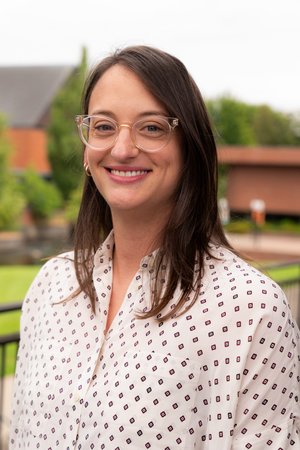
I am a PhD fellow in the HEALENAE Doctoral Network at Aarhus University's Department of Anthropology. I am a global health practitioner and researcher, and I have spent more than fifteen years working across Sub-Saharan Africa, including in Mozambique, Liberia, Uganda, and Kenya. Before joining Aarhus University, I worked with the American Cancer Society's Global Cancer Support team, supporting health system strengthening, cancer literacy, patient navigation, and oncology workforce development initiatives in East Africa. Throughout my career, I have been motivated by questions of health equity, particularly how social, environmental, and institutional conditions shape people's opportunities to access care and live well.
My PhD project explores gynecological cancer care pathways in East Africa, with ethnographic fieldwork centered in Uganda and a comparative analysis of policy environments in Uganda and Kenya. Jointly hosted by Aarhus University and Makerere University, the project examines how women, families, healthcare providers, and community support networks navigate cancer prevention, diagnosis, treatment, and follow-up. By following care journeys across clinics, communities, and homes, I hope to better understand how care continuity is maintained, interrupted, or transformed over time. More broadly, I hope the research will contribute to ongoing efforts to strengthen equitable cancer care systems while offering new insights into how people experience and navigate serious illness in their everyday lives.
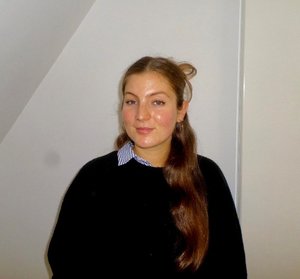
With a background in anthropology, African Studies, and political economy, I am a Greek-Tanzanian researcher whose work explores political economies of resource extraction in Tanzania. My Research Master’s thesis combined anthropology and political economy to study artisanal limestone and gravel aggregate mining in Dar es Salaam — an under-examined sector that contributes to urban development — with particular attention to the roles of gender, labour agency, and social reproduction in urban extractivism.
My PhD research builds on this work by examining the social and environmental consequences of dust pollution from limestone extraction, cement production, and infrastructure construction in Dar es Salaam as part of the HEALENAE project “Infrastructures of Toxic Evidence and Civic Protection” supervised by Prof Dr. Wenzel Geissler (University of Oslo) and Dr. Stella Neema (Makerere University). This research will be based at the University of Oslo and is particularly interested in how the political economy of dust shapes exposure to toxicity on the extractive frontiers of urban development, how toxicity is embodied and perceived, how pollution is monitored, and how scientific and community-based evidence of toxic pollution is produced, circulated, and contested.
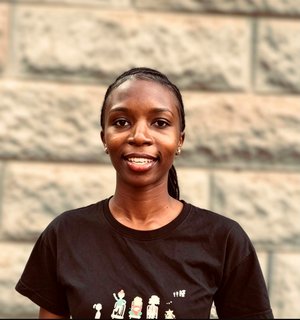
I am Charlotte Auka, a PhD student in the Department of Anthropology at Aarhus University. My research is part of the HEALENAE Project 10, Biosecurity: Food, Health Risks and Animal Disease, led by Professor Michael Eilenberg at Aarhus University and Professor Salome Bukachi at the University of Nairobi.
My research examines how pastoralist households along the Kenya–Tanzania border experience Foot-and-Mouth Disease (FMD) outbreaks and biosecurity interventions. While state and global biosecurity frameworks often assume compliance with measures such as quarantine and vaccination, my work examines how these interventions are lived and negotiated within everyday pastoral livestock systems. I use the concept of the “intimate frontier” to describe how disease control measures become part of everyday life, shaped by concerns around livestock health, livelihoods, and household survival.
Based on 12 months of ethnographic fieldwork in Kajiado County, Kenya, I focus on how biosecurity is practiced across pastoral livestock systems, with attention to generational and gendered differences in knowledge and practice. Children, youth, and elders play different roles in animal care and disease monitoring, shaping how risk is understood and managed in everyday life.
The project builds on my broader research interests in anthropology and participatory methods, while opening new avenues for examining animal health and biosecurity in pastoralist settings. My project contributes to broader debates on biosecurity, pastoralism, social reproduction, and everyday forms of state-making in East Africa.
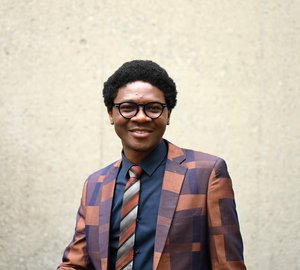
My name is Kingdom Fungai Karuwo. I am joining the HEALENAE Doctoral Network as a doctoral researcher under the co-supervision of Professor Ann Cassiman at KU Leuven and Professor Ruth Jane Prince at the University of Oslo. My intellectual formation has moved through Development Studies, African Studies, Anthropology and Sociology, and Development and Cooperation — disciplines sharpened, in turn, by professional practice within the United Nations and research institutions. Across these vantage points, one question has proven persistent: How do people sustain social worlds, livelihoods, and senses of belonging amid transformations imposed upon them and beyond their power to arrest?
My doctoral research, The Environments They Remember: Slow Violence, Temporal Displacement, and the Intergenerational Inheritance of Harm in Mining Communities, turns this question toward mining-affected communities in Zimbabwe. I ask what it means to remain rooted in a place even as the environment that once rendered it familiar is slowly unmade. Harm, here, rarely announces itself as a spectacle. It accretes — in diminished rivers, exhausted soils, altered livelihoods, and the long accumulation of exposure across bodies and generations.
At the centre of this inquiry lies memory, itself an archive of environmental change. Older generations may recall rivers that once ran clear, soils that yielded; the young inherit these only as narrated remnant, knowing the altered landscape simply as the world as it is. Out of this asymmetry I develop the concept of temporal displacement: the condition of remaining geographically at home while growing estranged, across time, from the ecological world that once made home recognisable.
Displacement of this kind, however, need not be only geographical as is commonly understood. Chronic illness offers a cognate case: one may remain, in the most literal sense, at home in one's own body, and yet grow steadily unfamiliar with it, as accumulated harm; biological, yet also psychological — reshapes what that body once was into something no longer fully recognisable to the self who inhabits it. Slow violence does not confine itself to landscapes; it inscribes itself onto bodies too, and its harms are not only material but intangible; felt in the widening gap between who one remembers being and who one has, almost imperceptibly, become. Temporal displacement, then, names a condition broader than any single field site: an estrangement that can unfold in environment and in bodies alike, without either ever ceasing, in the narrowest sense, to be home.
Through ethnographic fieldwork in Zimbabwe's mining-affected communities, I will trace this widening distance between remembrance and inheritance — attending as closely to what has been lost as to how communities narrate, inhabit, and resist that loss. It is, in the end, one more attempt to ask how people fashion lives amid transformations they neither chose nor could arrest — and how they hold on, regardless, to a sense of home and definitions of it across time.
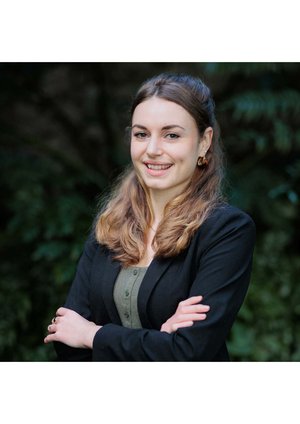
My name is Charlotte Sophie Bruns Knight, a PhD student in the Department of Anthropology, Gender and African Studies at the University of Nairobi, supervised by Professor W. Onyango-Ouma at UoN and Professor Steven van Wolputte at KU Leuven.
This research project extends into small East African Indian Ocean coastal towns that remain underrepresented in global health and urban commons scholarship, despite being at the forefront of climate- and infrastructure-driven transformation. It does so by examining how residents of coastal Kenya perceive and navigate shared urban commons amid rapid urbanisation, large-scale infrastructure development, and intersecting socio-ecological pressures, and how these shifting dynamics shape uneven health outcomes across communities.
This work grows out of time spent in Lamu, an island town on Kenya's northern coast, where questions of urban commons acquire a tangible immediacy: how they are shared or lost; how environmental degradation becomes embodied harm; and whose knowledge counts in governing collective resources.
Through ethnographic fieldwork in Lamu and the wider coastal region, I aim to trace everyday negotiations over shared resources, examine governance as it is enacted through infrastructures, social relations, and institutional arrangements, and explore the mechanisms through which this interplay produces uneven health burdens across gender, generation, religion, and socio-economic position.
Central to this research is the framing of these processes by residents through Islamic governance structures, customary tenure, and Swahili epistemologies, which shape how environmental responsibility, authority, and collective life are understood along the Swahili coast. My earlier work with the Ustadh Mau Digital Archive (UMADA), on the manuscripts of the Lamu scholar-poet Ustadh Mau, introduced me to these traditions as living intellectual practices that continue to inform interpretations of environmental change, rather than static cultural heritage.

My name is Mizuki Igata. I was born and raised in Tokyo, Japan, and hold a BA in Cultural Anthropology from the University of Tokyo and an MA in Medical Anthropology and Mental Health from SOAS University of London. My sustained research interest lies in the uncertainty embedded in experiences of mental health problems, and the subjectivity of what is sometimes called "madness." I have conducted several fieldworks in Japanese mental healthcare settings.
My PhD project investigates how gambling becomes entangled with youth experiences of mental distress in Kampala, Uganda. Contemporary gambling epidemics in East Africa are often associated with male-dominated sports betting venues; however, the rapid expansion of mobile platforms has diversified gambling practices and rendered them increasingly invisible, making them accessible to wider groups, especially women and younger populations. Amid rapid capitalism and fluctuating living conditions, my project aims to capture how boundaries between opportunity, responsibility, and addiction are constructed, and how young people interpret and manage "risk" in a postcolonial urban environment.
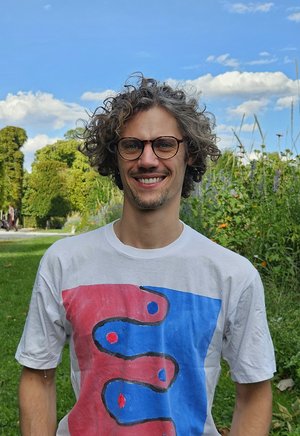
Trained in Social Anthropology at the University of Bern and the University of Vienna academically and through many rich encounters with people from different walks of life, my research interests are situated at the intersection of environmental and medical anthropology. Interested in how colonial and capitalist structures produce environmental and bodily, I examined in my previous research projects in Bretagne/France and Martinique how people living in chemically contaminated environments navigate their illness trajectories and interpret them amidst colonialism´s afterlives, scaled economies and institutional neglect.
For my doctoral project under supervision of Wenzel Geissler and Herbert Muyinda, I expand my ethnographic interests towards how human mental distress & wellbeing, and access to therapeutic care are equally shaped by structural conditions. Taking the continuous underfunding of Kenyan mental healthcare services as a topical entry point, the doctoral project explores what forms of therapeutic care emerge, are neglected, or become marginalized amidst the country´s “silent epidemic” of “mental illness” as officially declared in 2019 by then-president Uhuru Kenyatta. By ethnographically centring the lived realities of people experiencing mental distress and their therapeutic trajectories shaped by Mombasa´s politically, socially and religiously diverse past and present, I then seek to extrapolate research participant´s experiences onto a more systemic level to explore questions such as:
• Who has the authority to define bodily harm and determine the specific healing approach thereof?
• How do genealogies of colonialism, colonial psychiatry and scaled economies determine whose bodies ought to heal and whose bodies ought to suffer?
• What are the responsibilities of nation-states towards their citizens with mental distress?
• How do citizens respond when nation-states fail to provide adequate mental healthcare infrastructures?
To engage with these questions, the research project is engaging with a rich literary body ranging from fields like Transcultural Psychiatry, Critical Ethnopsychiatry and Medical Anthropology to more recent debates on Global Mental Health. While existing scholarly accounts serve as the theoretical backbone, I seek to take research participants´ lived realities and interpretations thereof as central determinators for topical, theoretical and analytical choices.
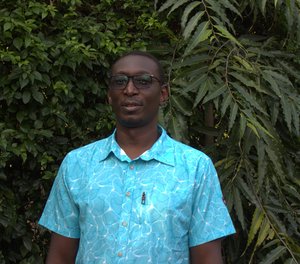
I am Hamilton Majiwa, a PhD fellow in the HEALENAE Doctoral Network at the University of Edinburgh, School of Social and Political Science, and the University of Nairobi, Department of Anthropology, Gender, and African Studies.
Before joining the University of Edinburgh, I worked for the International Livestock Research Institute (ILRI) in Nairobi, Kenya, where I supported research and development focused on equitable and locally led climate adaptation in the Livestock Climate and Environment program.
My PhD project tilted, Community, Policy, and Expertise in the Changing Ecology of Vector-Borne Diseases in North-Eastern Kenya, is part of HELEANEA Project 14: The Frontiers of Vector Borne Disease: Expertise and Response in Africa and Europe, supervised by Professor Rebecca Marsland at the University of Edinburgh and Professor Salome Bukachi at the University of Nairobi explores how climate-related ecological changes are transforming vector ecologies and disease risk in Ijara, Garissa County, Kenya. The study conceptualizes vector expansion not only as a biomedical issue but as a socio-ecological one as well, where climate change, expertise, and community knowledge intersect.
In the project, I will explore how communities interpret and respond to observed changes in insect populations and illness patterns in humans and livestock, how local adaptive ways interact with national and transnational climate and health policies, and how historical and political factors shape the production, circulation, and uptake of knowledge about vector-borne diseases. I aim to demonstrate how local adaptive strategies to vector-borne diseases in humans and livestock can be applied in responding to these diseases in newly affected parts of Africa and Europe as a consequence of climate change.